Often times I run across a collector who feels like he/she has missed the boat when it comes to collecting Glocks–that if you weren’t in back in the early days, that things have just gotten too expensive for the average Joe to get involved at this point. This post is offered as an inspiration for those of you in that boat; you have plenty of time!
The knife pictured is from our image gallery so you may have seen it while browsing the sight previously, but there’s not a full explanation for what it is or why it’s significant. And that story dovetails into one of the best features of being in the “Glock” hobby–the assortment of guns and items produced over the years as well as their easy availability on the internet means that this hobby is open to nearly anyone!
Now let’s back up and cover a little bit of history on Glock knives. Back in the 1970’s the Austrian government began programs to update their main service weapons which eventually led to Glock entering into military contracts. He first manufactured polymer machine gun links which opened the door to making polymer handles for the Zeitler ’77 knife–a Ludwig Zeitler design created to be the bayonet for the new STG77 (Steyr Aug). By 1978, Glock had supplanted Zeitler as the primary maker for all bayonets and legend has it that he and his wife stayed up all night stamping blades to try to keep with with the contractual obligations. It’s a good thing that he did so, as the contract for the knives is what eventually led to his securing a contract for the new P80 service pistol.
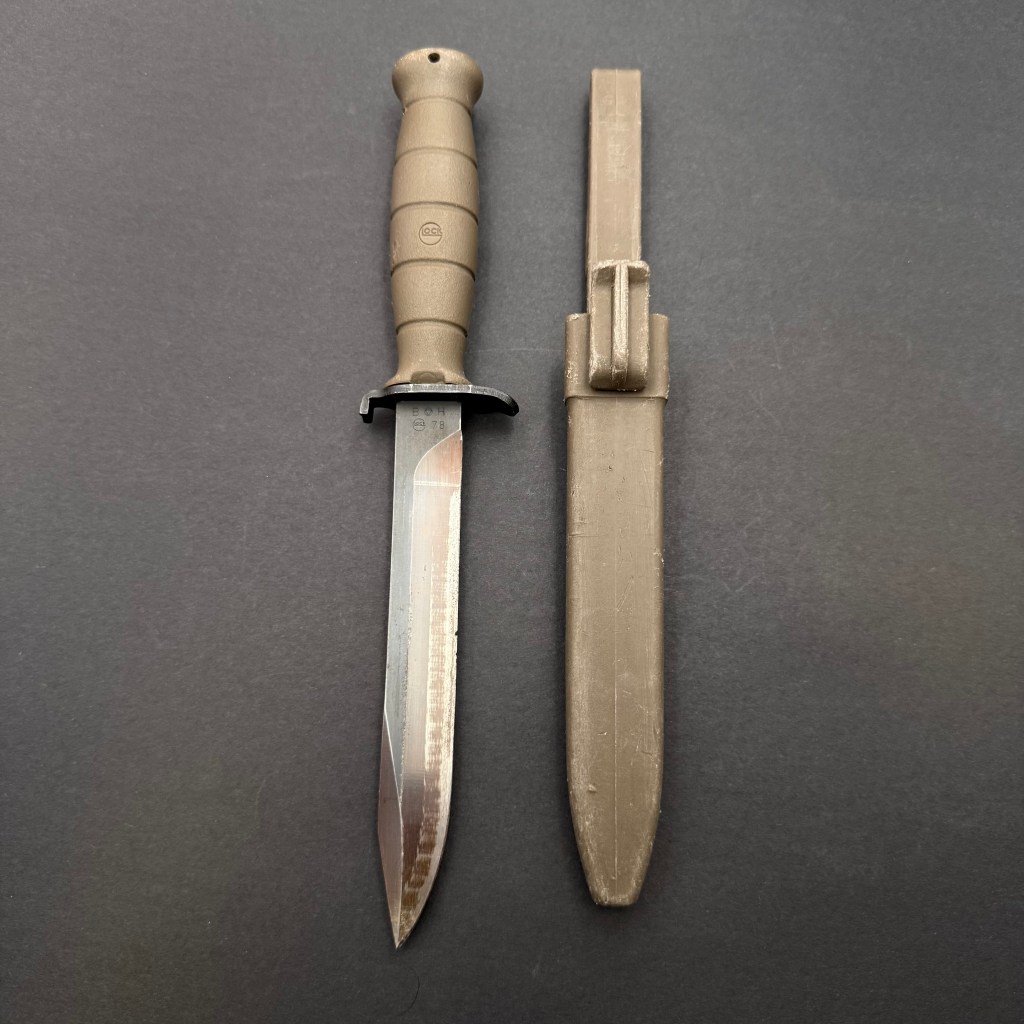
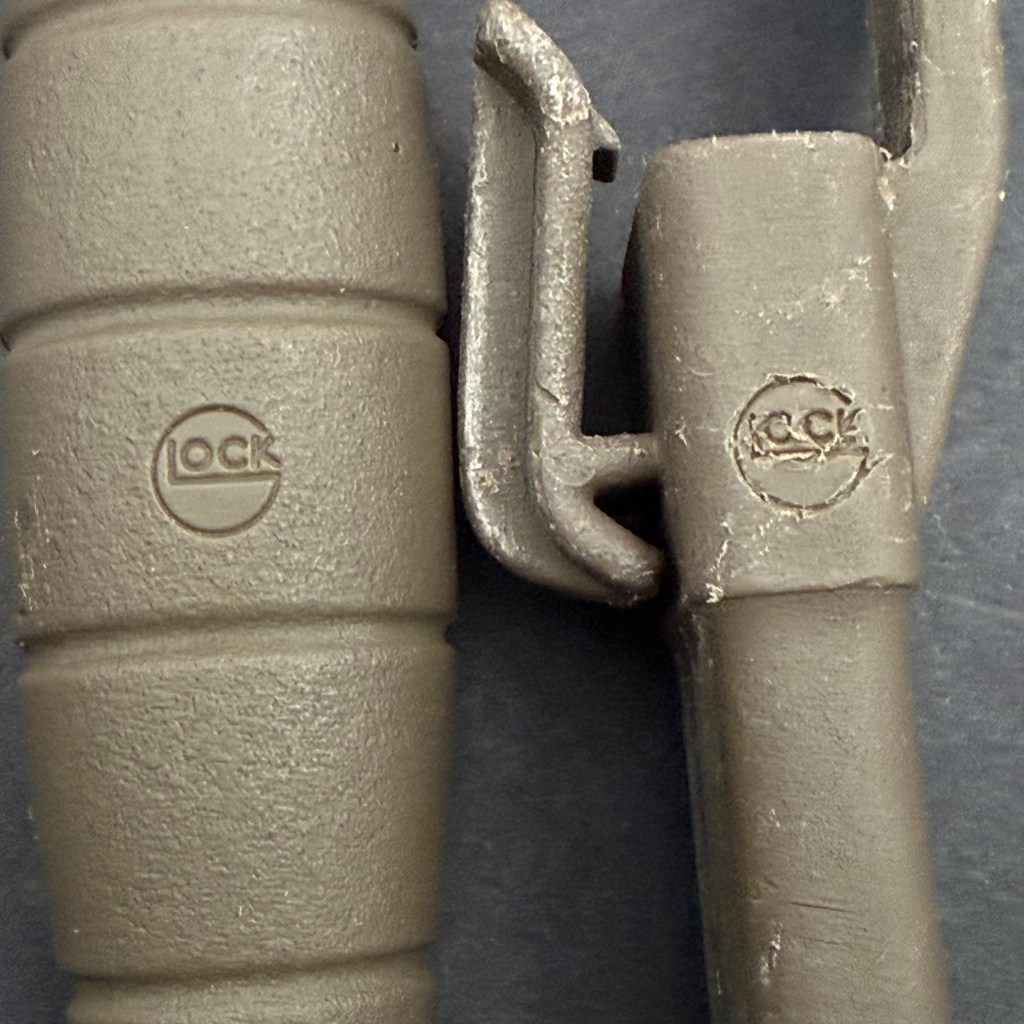
This FDE knife hails from those early days of production and you can tell this weapon was well used over the years. What makes this a special knife are the three letters stamped at the base of the blade “BOH” which is an acceptance stamp from the Austrian ministry of defense. We don’t know the history or where this weapon served, but that stamp combined with the early round logo (close-up picture below) would place it in the late ’70s or early ’80s and definitely Austrian Army issue!
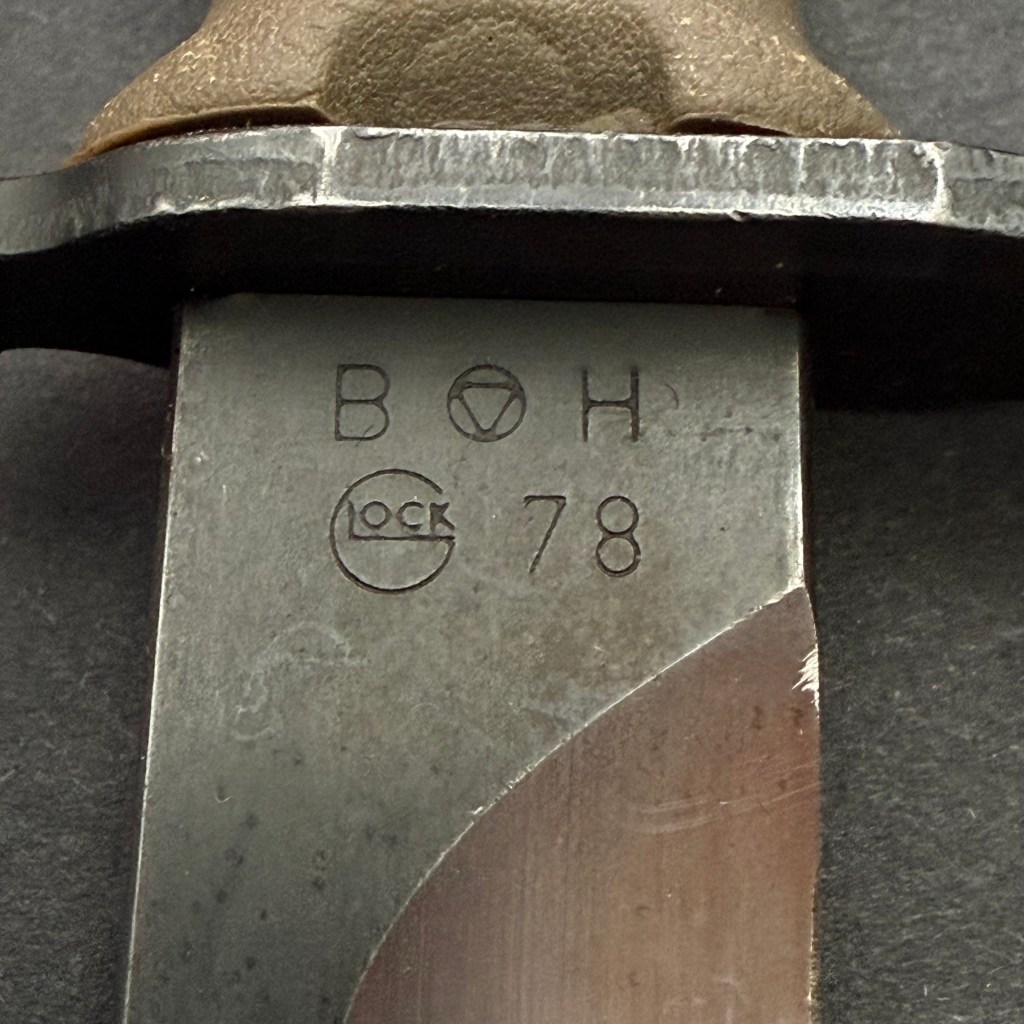
The sheeth has obviously seen a ton of wear and scrapes/bumps along the way. The blade has been re-sharpened but still holds an edge–the purple discoloration could be from heat of sharpening, refinishing, or just loss of finish over time and use.
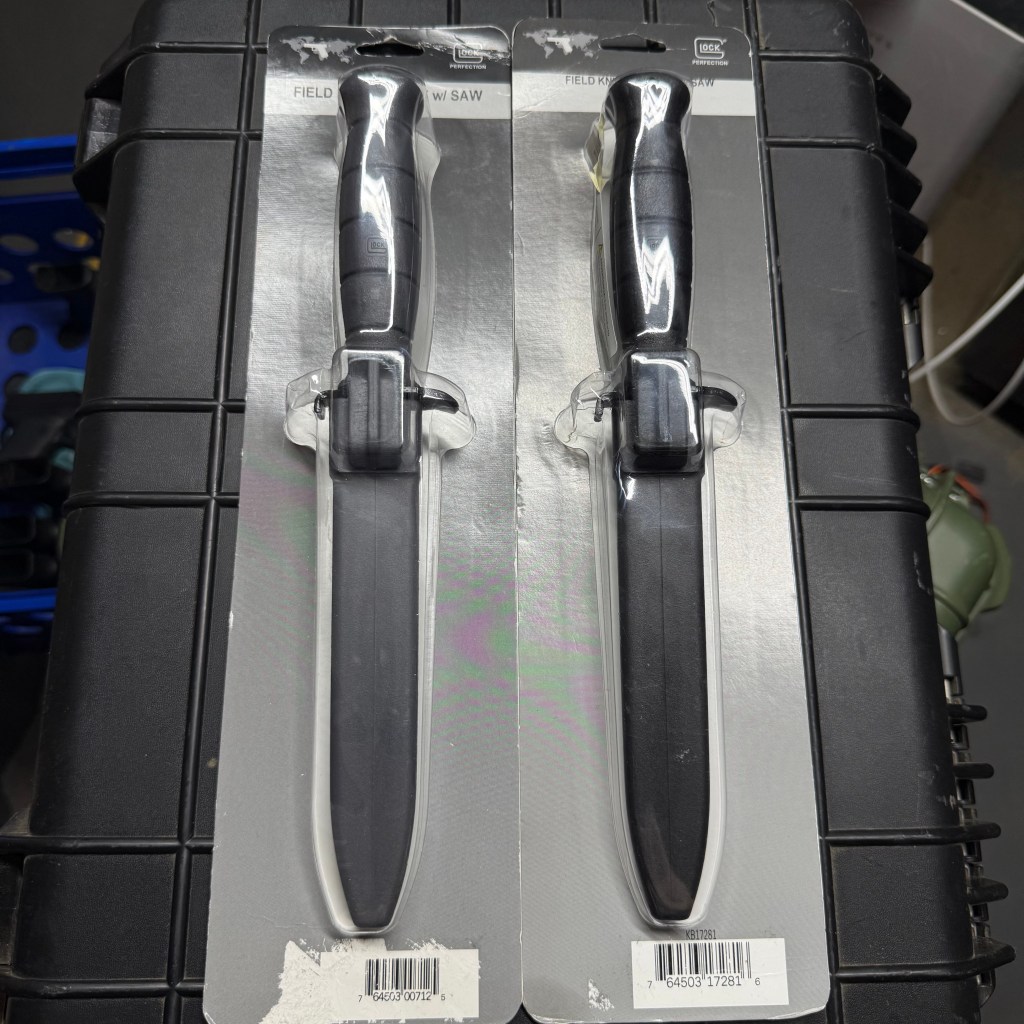
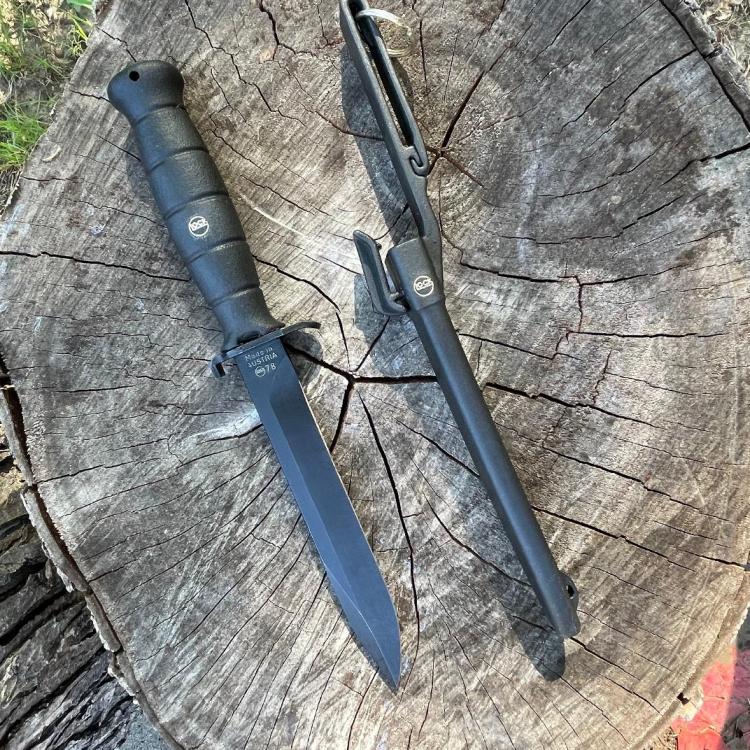
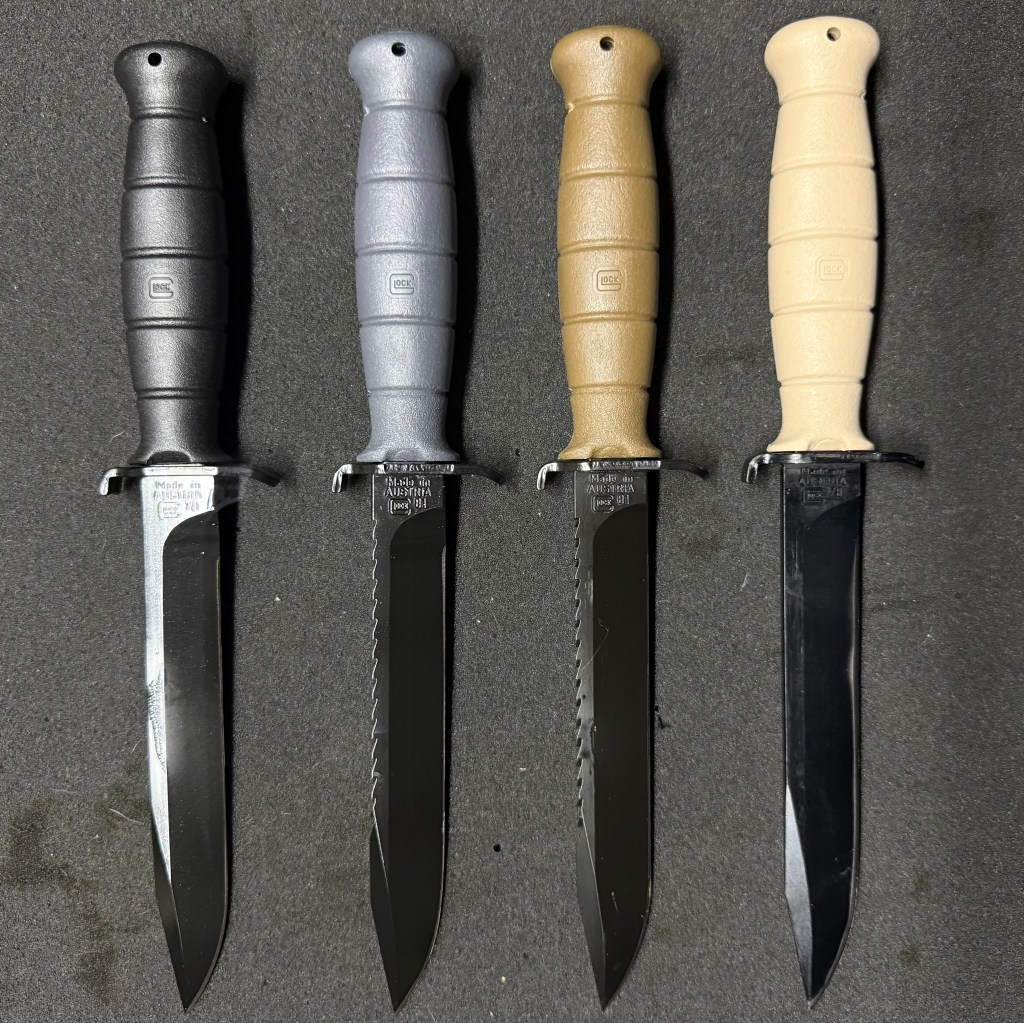
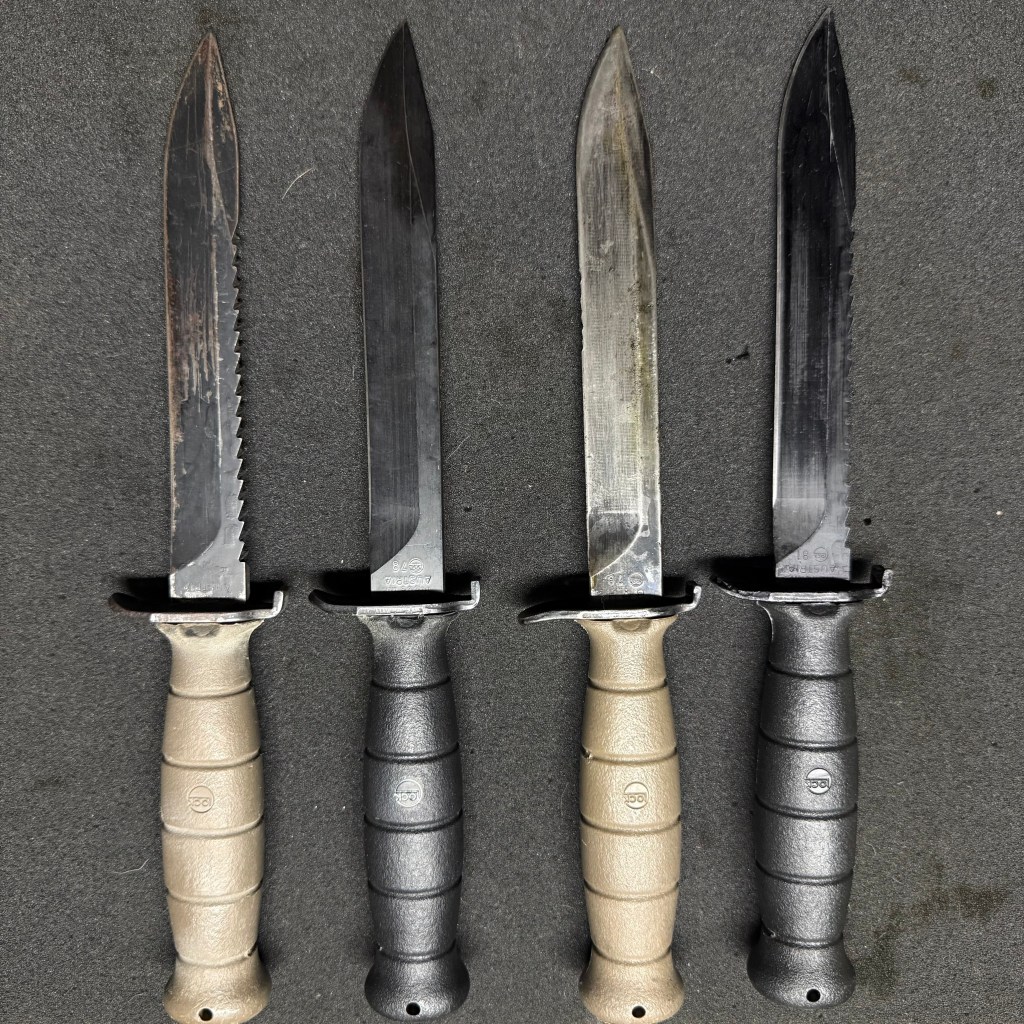
Now circling back to getting started in Glock collecting, the cool thing about the hobby, is that I have purchased a number of these knives, usually listed in Austria or Poland, on eBay, for less than $100/ea. It’s cool enough to get one old style military bayonet, but if one is so inclined to began a knife collection, there are a LARGE number of variants to chase down. The black knife at the top is a very early civilian version of the knife–which is basically the same but without the military stamping (note it also has the old style round logo, though the color filling isn’t standard). There are multiple colors available in each variation (at least four?) and the company still produces new knives to this day. The brand new models can be purchased for around $35/ea and, as a starter goal, just finding one of each color can be challenging enough. Also, the original FM78 was a standard fixed blade, but in 1981, they released the FM81 which is a sawback version–and there are multiple colors of each. In the US, they are only selling the sawback variant these days so it’s tough to find the FM78s even ones with the “new” standard Glock logo instead of the early circle. Want to up the challenge level but still on a tight budget? Try finding variations in original packaging for different ages of the design. Outside of some minor alterations to the guard and the belt loop on the sheath, both of which came before wide production began, the basic knife hasn’t changed it’s shape since those early days; but the changes in packaging provide a whole new challenge for a collector to go after. For the extreme collector who has to have one of everything, there are some special edition knives with less than 1,000 in total production that can be near impossible to track down.
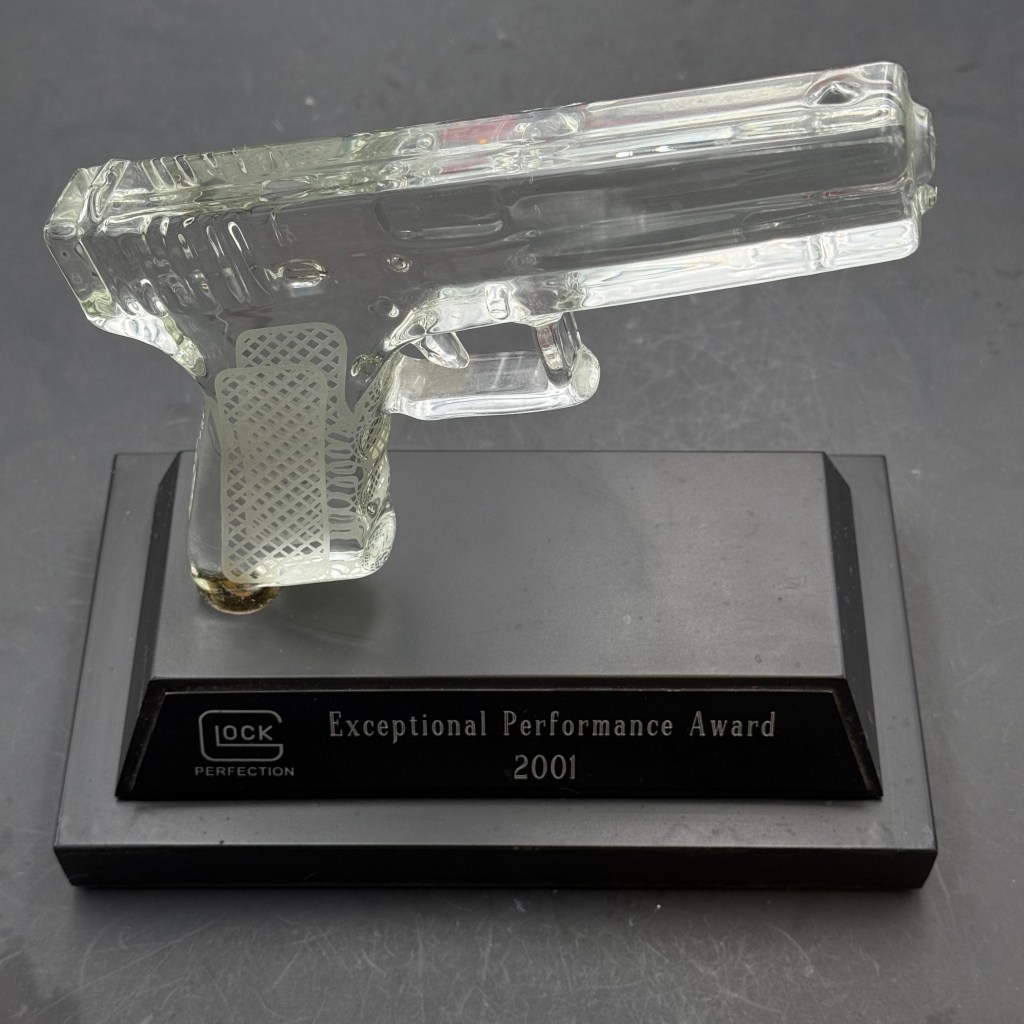
The knives offer an example of a common concept with Glock; There is a wide array of small niches all over the hobby where you can get immersed in the nuance of Glock history. Patches, pins, posters, playing cards, t-shirts, magazines, brochures, paperweights, or even one-off oddballs like this distributor award I purchased a few years back (yes, it’s a real award. no, it’s not a real Glock–just glass, but maybe the only glass Glock made for the company in existence). Most of these small niches can become your new hobby for $20 or less and you’ll be amazed to find how many other collectors are drawn to anything associated with the Glock company. So get started now!
Modern knives with different color grips.
FM78s and FM81s all with the old circle logo!
I don’t have a full collection of these, but here are some new sealed knives in one generation back’s packaging (new packaging looks similar but with orange trim).