We’ve discussed training models on the sight before and the break-down of P, R, and T models and what they are used for (https://glockhistory.com/only-for-law-enforcement/). This post has more to do with the history of their development as a new odd variant has recently come to market.
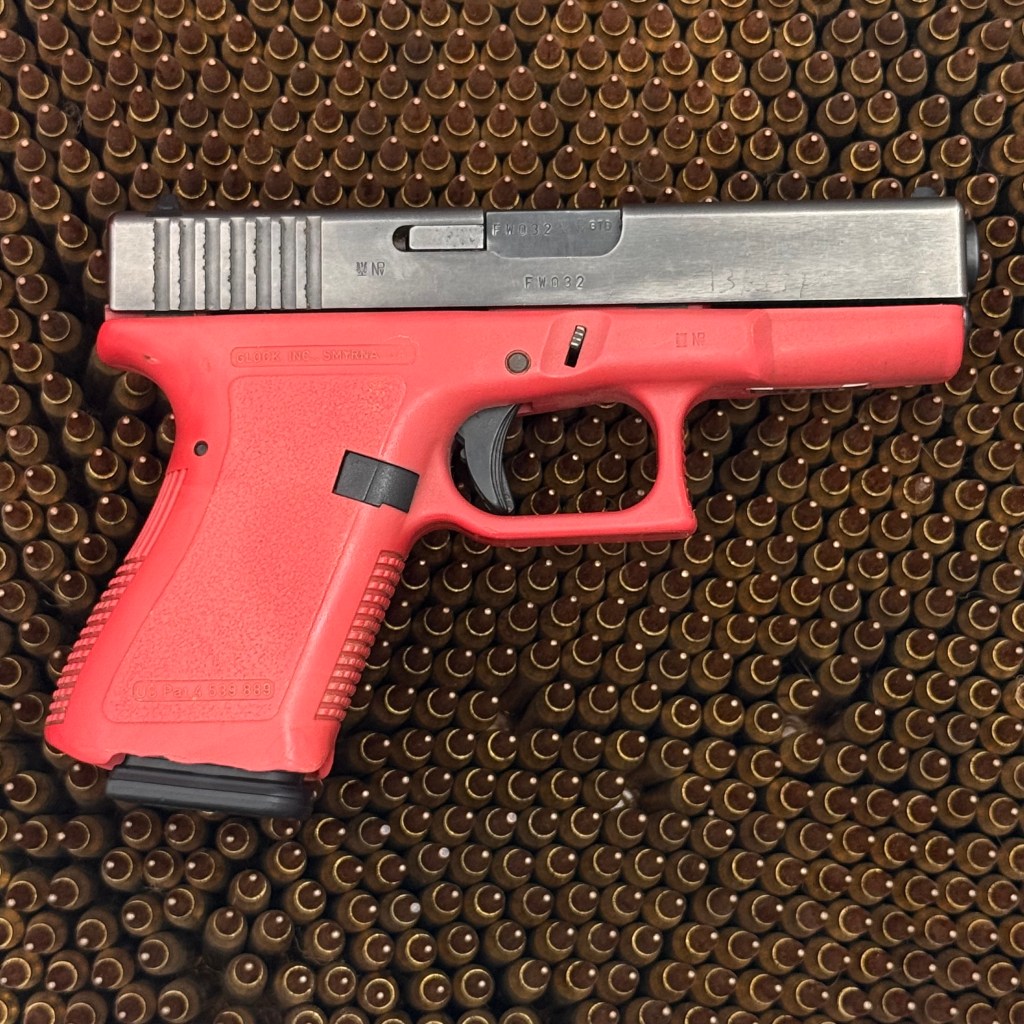
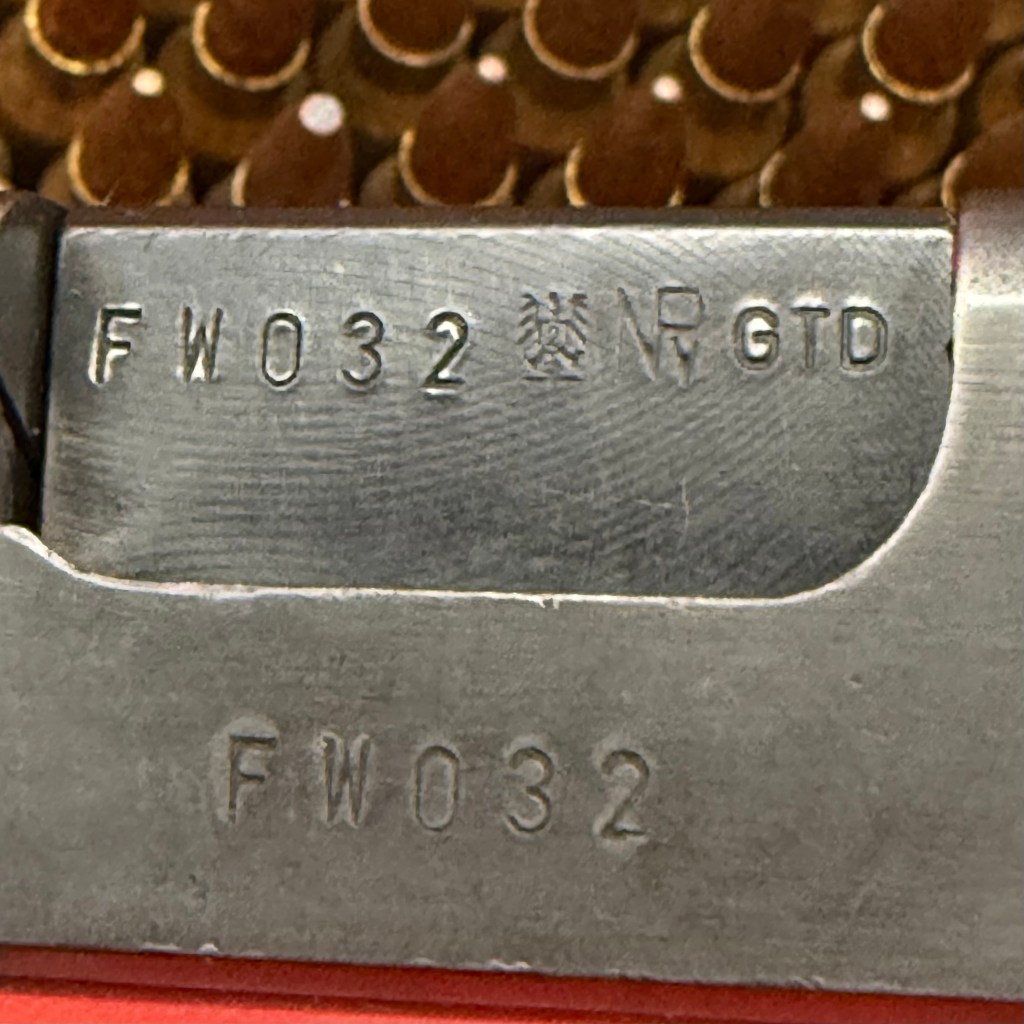
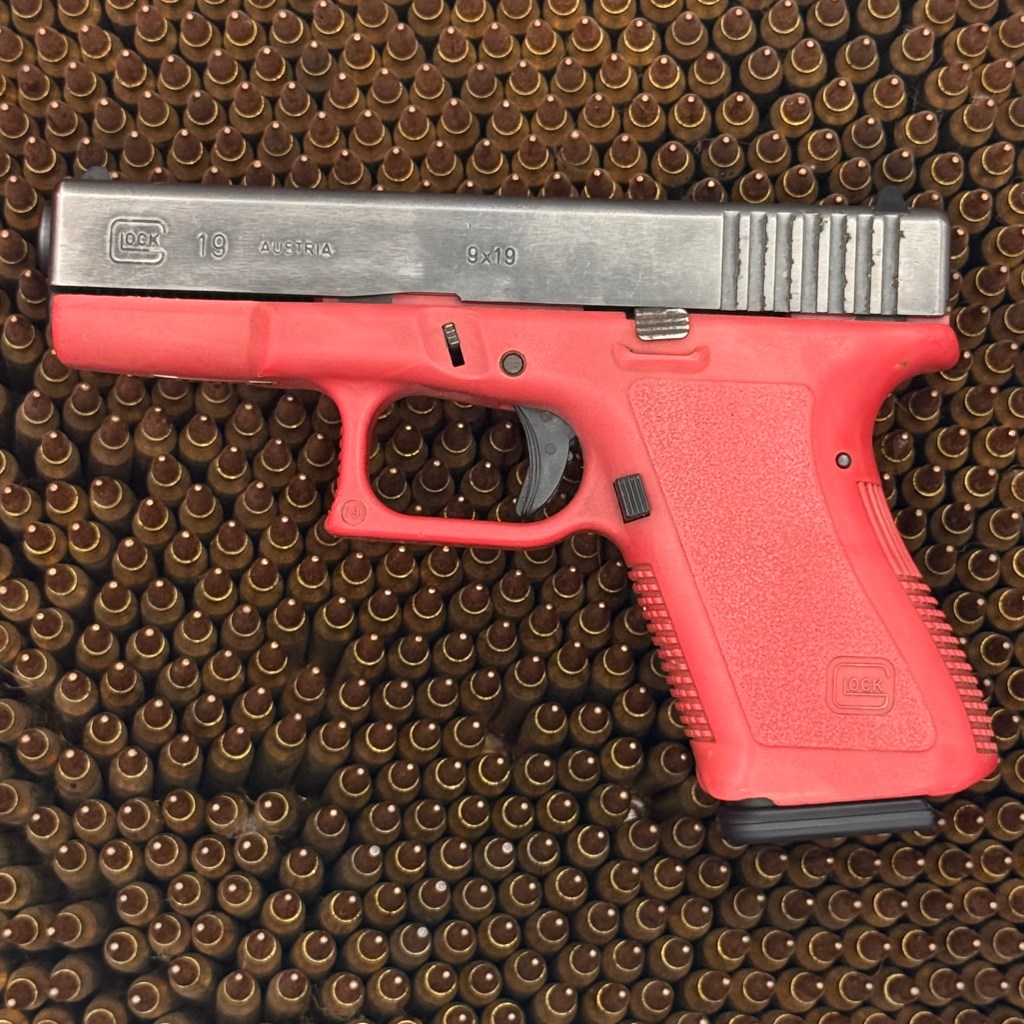
This red 19 appears to be from the first run of non-black frames produced by Glock (two -letter FW prefix and 1989 date code). This is approximately eight years before Glock began regular production of the P, R, and T models and no other training models have been uncovered in that interim period. While there are some guns that come up from time to time with PAINTED frames, and red typically is used to designate an inert trainer (for use in handling and retention drills or dry-fire practice), the series above is actual tinted polymer. And that difference is significant as a pigmented frame had to be produced at the factory where painted guns can be produced by anyone (indeed, I’ve run across many damaged pistols that police departments would paint and convert to use in various drills).
Unfortunately, like many things in the Glockoverse, there are no official records and no verifiable history has been uncovered at this time–so all we know for sure is that they are real red frames and they were made in 1989. The serial range of known models spans about 50 sequential numbers so there had to be a police department or federal agency that was big enough to order 50 training guns and important enough to Glock that they accommodated that request. The uppers appear to be standard 19s but they welded the breech face shut (to prevent an accidental discharge in the case of a live round being loaded) and they also cut the tip off the firing pins so that even if the hole opened, the pin would not make contact with the primer. Other than those alterations, the guns are standard Glock 19s. Since there was no alteration to the frames, they can actually fire live rounds if you swap a standard upper on to the red lower (Later iterations of training models became increasingly safety conscious and typically come with altered barrels that are incapable of firing).
One other unique aspect of these guns is the EXTREME level of use. The polymer texture is smoothed down from wear, they retain very little of the original black finish, and the rear slide serrations were handled so excessively that they have rusted/corroded away the edges and have jagged corners rather than nice clean straight milling cuts. All the known samples appear to be in similar condition and a couple that came up even had cracked frames (which may have been from damage rather than wear–there’s no way for us to know). Whether they were bought any held by one agency or were traded/loaned around for 35 years before reaching the secondary market, they were obviously repetitively handled. And just in case you were curious, the barrel rifling is still bright and shiny and pit free like all Glock barrels.
If you happen to have come across this post and have any knowledge about the history of these pistols, please drop a comment and fill the rest of us in. As it stands, they are still one of the rarest production variants of Glock-made pistols known in existence and make for a unique conversation piece for a Glock collection display!